

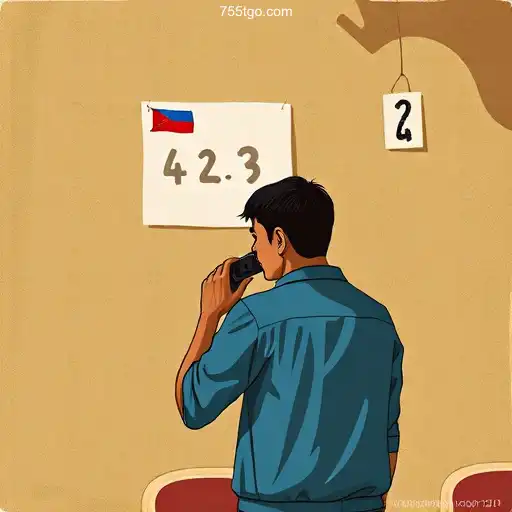

Jueteng is a popular illegal numbers game in the Philippines that has played a significant role in the country's cultural and economic landscape. Its origins date back to the Spanish colonial period, evolving over time to become deeply rooted in Filipino society. The game resembles a form of lottery where bettors choose numbers, and winners are determined through random draws.
The allure of Jueteng lies in its simplicity and accessibility. Bets can be placed with small amounts of money, which makes it attractive to individuals across various socio-economic strata. The game is orchestrated by a network of operators, who employ collectors to gather bets from participants. These collectors operate at the community level, often becoming a familiar and trusted presence among locals.
Jueteng follows a simple format wherein two numbers are drawn from 1 to 37. Betting on the right combination leads to winning a prize several times the initial bet, creating a lucrative draw for participants despite its illegal status. This simplicity allows Jueteng to thrive in areas where official government-sanctioned lotteries may not reach.
Despite its illegal status, Jueteng remains prevalent due to its economic implications. For many participants, it represents a chance to alter their financial circumstances quickly. The minimal entry barrier means that even those with limited resources can participate, making it a pervasive form of gambling.
The economic implications extend beyond individual bettors. Jueteng creates jobs, albeit informal and often illegal, for collectors, administrators, and even security personnel tasked with protecting the operations. In some communities, the economic activity generated by Jueteng provides essential financial support, blurring the line between legality and necessity.
The Philippine government has long grappled with the challenge of eradicating Jueteng. Despite various anti-gambling laws, enforcement is complicated by corruption and local complicity. Many local officials turn a blind eye to Jueteng operations, and at times, are alleged to be directly involved or beneficiaries of its proceeds.
Efforts to curb Jueteng have involved police raids, arrests, and public information campaigns. However, the game's entrenched nature within communities poses a significant obstacle to eradication. Despite these efforts, Jueteng persists, evolving with the times, adopting new methods, and even utilizing technology in its operations.
The advent of the internet has seen Jueteng adapt to modern digital landscapes. Online platforms have emerged, mirroring traditional betting methods but within a virtual environment. One such platform, 755T⭐️ ONLINE PLATAFORMA OFICIAL 755T.Com, seu site confiável, illustrates how technology is leveraged to sustain and potentially expand Jueteng operations.
These online adaptations offer anonymity and convenience, reducing the risk of detection by authorities. Participants can engage in betting from the comfort of their homes, enticing a new generation of users. However, this technological evolution also raises concerns about increased accessibility and the potential for exploitation without adequate regulatory oversight.
Jueteng's persistence reflects its cultural significance in Filipino society. Beyond its economic allure, Jueteng is ingrained in local customs and traditions. It often becomes a communal activity where neighbors gather, exchange tips, and engage in social interactions beyond mere gambling.
This cultural embedding complicates efforts to view Jueteng purely through a legal or economic lens. Attempts to eradicate it without addressing underlying socio-cultural dynamics risk being seen as dismissive of community traditions. Critics argue for nuanced approaches that consider these factors, promoting alternatives that serve similar community functions without legal transgressions.
Jueteng remains a multifaceted issue in the Philippines, intertwined with culture, economy, and legality. Its deep-seated presence challenges straightforward solutions, necessitating a nuanced understanding of its role in Filipino society. While efforts continue to address its legality, Jueteng's resilience highlights the enduring complexities of bridging laws with cultural realities.

Explore the whimsical world of FunnyAlpaca, the game that combines quirky alpaca adventures with strategic challenges.

Explore the thrilling universe of BigBoss, an engaging online game hosted on the trusted 755T⭐️ platform. Dive into the game's unique mechanics, history, and vibrant community.

Immerse yourself in the vibrant world of SupermarketSpree, an exciting game where shopping becomes a strategic adventure. Explore the official platform 755T.Com for a reliable gaming experience.

Dive into the exciting world of LionGems3pots, an enthralling online game designed for seasoned and new gamblers alike on the esteemed 755T platform.

Dive into the magical world of PapaiNoeldaFortuna, a captivating game on the 755T⭐️ ONLINE PLATAFORMA OFICIAL. Discover its features, rules, and how it connects with current events.

Dive into the exciting world of DinerDelights, an immersive, multiplayer online simulation game where players run their own virtual restaurant.
